Fitness Program in Sacramento, CA

Exercise is one of the most consistently effective interventions for adult mental health. The evidence has been clear for years and has only strengthened: regular physical activity produces antidepressant effects, reduces anxiety, improves sleep, and supports the neurochemical and structural brain changes that sustain recovery. For adults in residential mental health treatment, building a consistent fitness practice during the stay is not a wellness perk. It is treatment.

At Sacramento Mental Health, the fitness program is built into each resident’s daily schedule and supervised by trained wellness staff. The emphasis is on consistent, sustainable movement that residents can carry forward after discharge — not maximum-intensity training and not athletic performance.

Related Conditions

Our Treatment Approach

Where Fitness Fits in Mental Health Recovery

The clinical modalities at Sacramento Mental Health — individual therapy, group programming, medication management, evidence-based treatments like CBT, DBT, and trauma-focused therapy — are what drive recovery from major depression, anxiety disorders, PTSD, bipolar disorder, and the other conditions we treat. The fitness program sits alongside those modalities as an adjunctive practice. It does not replace clinical care; it supports it.

The reason fitness is integrated into the program rather than offered as an optional add-on is that the mental health benefits of exercise depend on consistency. Two workouts a week produce different outcomes than five. A daily walk does more than a single hard session followed by a week off. By building fitness into the residential schedule with structured supervision and clinical integration, the program gives residents something a gym membership cannot: a daily practice that runs whether or not motivation shows up that morning.

For many residents, the residential stay is the first time in months or years they’ve moved their body regularly. Depression collapses activation. Anxiety makes leaving the house exhausting. Trauma keeps the nervous system locked in a state where exertion feels unsafe. The fitness program is structured to reverse that pattern carefully — starting where the resident actually is and building from there.

Exercise and Mental Health: The Evidence

Depression

Multiple meta-analyses of randomized controlled trials have found that supervised exercise produces antidepressant effects comparable to first-line treatments for mild-to-moderate depression. Aerobic exercise has the strongest evidence base, but resistance training also shows meaningful antidepressant effects. The mechanism appears to involve BDNF release, neurogenesis in the hippocampus, monoamine system modulation, and the inflammatory regulation that overlaps with how SSRIs work.

For residents on antidepressant medication, regular exercise during residential care can amplify medication response. For residents whose depression has been resistant to multiple medication trials, exercise is one of the more promising adjunctive interventions.

Anxiety

Aerobic exercise reduces both state and trait anxiety. The effect appears within a single session and accumulates with consistent practice. For generalized anxiety disorder, panic disorder, and social anxiety, regular fitness practice is supported by research as a meaningful adjunct to therapy and medication.

Trauma and PTSD

Exercise supports trauma recovery through several mechanisms: nervous-system regulation, sleep improvement, and the structured discharge of activation that trauma survivors often carry chronically. For residents with PTSD or complex trauma, the fitness program runs with the same trauma-informed defaults the rest of the program uses — predictable structure, choice at every step, and no surprises.

Sleep, Cognition, and Mood Stability

Adults with mental health conditions almost universally have disrupted sleep, and disrupted sleep makes everything worse. Regular exercise improves sleep architecture and total sleep time. The cognitive benefits — improved focus, memory, executive function — also support engagement with the clinical work of residential treatment.

For residents with bipolar disorder in stabilized phases, consistent moderate exercise supports mood stability. For residents with schizophrenia spectrum conditions, exercise has been shown in trials to reduce both positive and negative symptoms and improve overall functioning.

What the Fitness Program Looks Like

Supervision

The fitness program is supervised by wellness staff with experience working in mental health and recovery settings. Programming is coordinated with the clinical team to ensure each resident’s fitness sessions align with their treatment plan, medical considerations, and recovery goals.

Sessions

Fitness sessions are scheduled multiple times per week as part of the residential day. The exact frequency varies based on the schedule and who’s in residence, but residents can expect regular fitness blocks built into the rhythm of the program. Some sessions are group-based, others are individual or paired, depending on what’s most useful that day.

Activities

The program emphasizes a mix of cardiovascular movement (walking, light cardio, gentle aerobic work), strength and resistance training (bodyweight movements, light free weights, resistance equipment), functional movement (mobility, posture, the basic patterns that support daily life), and active recovery (stretching, slow movement, breath integration).

The specific activities adapt to who is in the program. A resident with a long fitness background gets different programming than someone who has not exercised in years.

Equipment and Setting

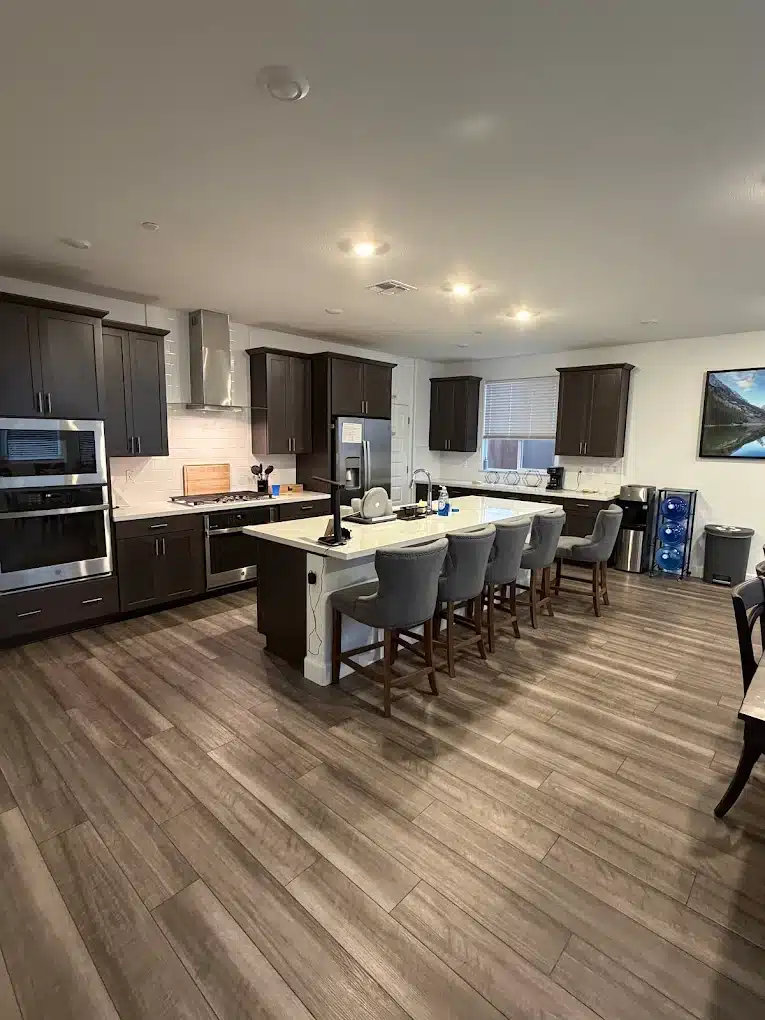
The program operates from the Sacramento Mental Health residential facility — no off-site gym memberships, no transport logistics. Equipment is appropriate for a residential setting and accessible to residents at every starting point.

Integration with Treatment

The fitness program is not separate from the rest of treatment. Wellness staff coordinate with the clinical team on residents who have medical considerations, recent treatment changes, or specific therapeutic goals where fitness is particularly relevant. A resident working on behavioral activation for depression, for example, gets programming that builds the consistency-and-completion experience that activation requires.


Explore Treatment Approaches

Why Choose the Mental Health Treatment and Stabilization Center of Sacramento

Our Approach to Fitness at Sacramento Mental Health

Consistency over intensity

A daily fitness practice at moderate intensity produces more mental health benefit than occasional high-intensity training. The program is built to make the next session easier than the last — not harder.

Sustainable habits over peak performance

The fitness practice is meant to outlast the residential stay. Programming favors movements and routines residents can continue after discharge — at home, at a community gym, or as part of ongoing outpatient care. Athletes pushing for personal records are not the target audience.

All bodies welcome

There is no fitness prerequisite for participation. Residents arrive in every conceivable condition — physically active, sedentary for years, recovering from injury, dealing with chronic pain, post-surgical, every variation. The program adapts to where each resident actually is.

Trauma sensitivity

The fitness program runs with the same trauma-informed defaults as the rest of the wellness program — choice at every step, predictable structure, no physical adjustments without invitation, and the explicit understanding that residents can opt out of any element of a session without explanation.

Integration with clinical work

Fitness is not a separate program disconnected from treatment. Wellness staff coordinate with the clinical team, programming is calibrated to therapeutic goals, and the work in the gym supports the work in the therapy room.

Next Steps

Where you are in this matters. Find the path that fits where you are right now.

If you're ready to talk

A 15-minute call with our admissions team is the fastest way to get clarity. We’ll cover symptoms, fit, coverage, and timeline.

Call (916) 527-9606

If you're not sure residential treatment is right

Many people start by sitting with the question of whether residential care is the right next step. A comprehensive clinical assessment is the most reliable way to find out — it maps the diagnostic picture, severity, any co-occurring conditions, and the level of care that actually fits.

Learn how the comprehensive assessment works

If you're researching for a loved one

Bringing residential treatment into a family conversation is hard. Start by meeting the clinical team who would actually treat your loved one, and seeing how admissions handles family involvement.

Meet our clinical team

Coverage and Payment

Sacramento Mental Health works with families to make residential mental health care accessible. Call (916) 527-9606 to discuss coverage and payment options with our admissions team.

See What Our Clients are Saying

Frequently Asked Questions

Do I have to participate in the fitness program?
Participation in the wellness program is encouraged but not mandatory. The clinical team works with each resident to identify which adjunctive components — fitness, yoga, music therapy — are most useful for their specific situation. Most residents engage with the fitness program at some level; how much and how intensely varies considerably.
What if I've never exercised before?
That is one of the more common starting points. The program is built to accommodate residents who have not exercised in years, never had a structured fitness practice, or are dealing with the kind of low energy and motivation that mental health conditions produce. Programming starts where the resident actually is — not where someone expects them to be.
What if I have a physical limitation, injury, or medical condition?
Wellness staff and the clinical team coordinate on any medical considerations before programming. Residents with limitations, injuries, chronic pain, or other physical issues get programming adapted to their situation. The default is to work within what the body can do safely — not to push past it.
What kind of equipment is available?
The facility has appropriate equipment for a residential setting. The program emphasizes movements and exercises that can be replicated after discharge with minimal equipment, so the fitness practice is sustainable beyond residential care.
Can I keep this going after I leave residential treatment?
Yes — and we strongly recommend it. The mental health benefits of exercise depend on consistency over months and years, not a 30-day stay. Discharge planning includes recommendations for community fitness resources, accessible at-home routines, and continuing the practice as part of ongoing recovery.

Medically Reviewed By

Picture of Dr. Bonnie J. Mitchell DBH, LPCC

Dr. Bonnie J. Mitchell DBH, LPCC

Dr. Bonnie Mitchell is a behavioral health leader, clinician, and advocate dedicated to expanding access to compassionate, evidence-based mental health and substance use treatment. She earned her Doctor of Behavioral Health degree from Arizona State University in 2018, holds a Master’s degree in Clinical Counseling for Mental Health, and a Bachelor’s degree in Psychology. She is a Licensed Professional Clinical Counselor in California. Throughout her career, Dr. Mitchell has served in executive and clinical leadership roles including Executive Director, Regional Clinical Director, and C-suite behavioral health executive.