Home | Mental Health Disorders | Depressive Disorder Treatment | Major Depressive Disorder Treatment

Major Depressive Disorder Treatment in Sacramento, CA

Major Depressive Disorder (MDD) is the most common form of clinical depression — a discrete depressive episode involving persistent low mood, loss of interest or pleasure, and a cluster of cognitive, physical, and behavioral symptoms lasting at least two weeks and causing significant impairment. At our Cal DSS-licensed residential program in Roseville, our clinical team treats adults across Greater Sacramento and Placer County whose major depression has crossed into severity that outpatient care can’t safely manage. We admit and treat directly.

Related Conditions

Our Treatment Approach

Our clinical team uses evidence-based therapies with strong research support for major depression — Cognitive Behavioral Therapy, Behavioral Activation, and Interpersonal Therapy where indicated — combined with appropriate medication management. The exact mix depends on what the comprehensive assessment reveals about severity, treatment history, and co-occurring conditions. Every treatment plan is built and led by our Clinical Director, with medical oversight from our Medical Director.

Evidence-Based Treatment for Major Depression

The first-line treatment for MDD is the combination of evidence-based psychotherapy and appropriate antidepressant medication. For severe major depression, the combined approach significantly outperforms either treatment in isolation. Our clinical team builds personalized treatment around the specific symptom picture, previous medication trials, and the co-occurring conditions in play — and adjusts medication strategy in real time as the response trajectory becomes clear.

Why Residential Treatment Is More Effective for Severe MDD

Outpatient MDD treatment — typically a weekly therapy session and a monthly medication check — gives an adult with severe major depression hundreds of hours between contact points to manage symptoms alone. For adults with active suicidality, severe withdrawal from daily life, treatment resistance, or recent crisis events, that pattern often fails. Our residential program provides daily clinical contact, immediate medication adjustment when needed, a behavioral structure that interrupts withdrawal, and the safety of a clinical environment.

Our Residential Structure

Sacramento Mental Health provides around 30 days of structured residential care, followed by a coordinated step-down to outpatient or virtual support. For MDD specifically, the residential window allows medication stabilization, builds behavioral momentum that the post-discharge environment can sustain, and equips the individual with cognitive and behavioral tools for the months ahead. The residential stay is the inflection point, not the end of treatment.

When Residential MDD Treatment Is Right for You

Outpatient care works for many adults with moderate MDD, and we recommend it first when the clinical picture supports it. Residential treatment becomes the right next step when severity has crossed into territory that outpatient care can’t safely or effectively reach. The clinical signals below are the most common indicators a residential stay is worth considering.

  • Active suicidality, recent suicide attempt, or recent crisis intervention
  • Severe withdrawal — unable to maintain work, relationships, or basic self-care
  • Treatment-resistant depression after two or more medication trials
  • Co-occurring substance use, PTSD, OCD, or severe anxiety complicating outpatient response
  • Recent hospital discharge needing a structured step-down
  • Diagnostic reassessment needed — possible bipolar pattern or psychotic features

What to Expect — Your First 30 Days

A typical residential stay at Sacramento Mental Health unfolds in phases. The schedule adapts to each person, but the structure is consistent — beginning with assessment and stabilization, moving through the deeper work of cognitive and behavioral therapy with medication adjustment as needed, and ending with discharge planning that connects each person to outpatient or virtual care for the months ahead.

Day 1 — Comprehensive assessment and intake. Clinical evaluation, psychiatric history, medication review, suicide-risk assessment, and a treatment plan tailored to the specific presentation and any co-occurring conditions.

Days 1-3 — Stabilization and orientation. Settling into the residential environment, initial medication adjustments if clinically indicated, meeting the clinical team, and beginning structured daily programming.

Week 1 — Behavioral activation foundation. Building daily structure, beginning CBT or Behavioral Activation, and starting the behavioral work that interrupts depressive withdrawal.

Weeks 2-3 — Deeper therapy and medication optimization. Sustained therapy work in individual and group settings, with continued medication management as the response trajectory becomes clear.

Week 4 — Step-down planning and transition. Coordinating outpatient psychiatry and therapy with another organization, equipping the individual and family with a relapse-prevention plan and the structure to sustain progress after discharge.


Explore Treatment Approaches

Why Choose the Mental Health Treatment and Stabilization Center of Sacramento

Choosing where to admit yourself or a family member during a severe major depressive episode is one of the most consequential clinical decisions in the recovery process. The right program needs more than a safe environment. It needs clinicians and prescribers who can treat severe and treatment-resistant depression, the willingness to do real diagnostic work when antidepressants alone haven’t been enough, and integrated care for the anxiety, trauma, or substance use that so often complicates outpatient response. Here is what makes our Roseville program the right fit for adults with major depression across Greater Sacramento and Placer County.

Integrated Therapy and Medication Stack

Our clinical team builds personalized treatment around the evidence-based combinations — CBT or Behavioral Activation plus appropriate pharmacotherapy — that produce the strongest outcomes for severe MDD. Our medical director leads the medication strategy alongside the psychotherapy work.

Treatment-Resistant Depression Expertise

Roughly a third of adults with major depression meet criteria for treatment-resistant depression. Our team approaches treatment-resistant cases with comprehensive diagnostic reassessment, augmentation strategies, and the intensity that residential care provides — rather than another round of the same outpatient pattern.

Co-Occurring Expertise — Anxiety, Trauma, Substance Use

The majority of adults with MDD also live with a co-occurring condition. Our clinical team treats anxiety, PTSD, OCD, and substance use integrated with the depression work — because addressing them sequentially typically means none of them resolves.

Direct Provider, Not a Referral Service

We admit and treat adults directly at our Cal DSS-licensed residential facility. Families don’t have to navigate a referral chain or wait for someone else to call back. Cal DSS Facility License #315920208 reflects state-verified clinical, safety, and operational standards.

Placer County’s Residential Mental Health Home

Most residential mental health programs in Northern California are clustered in Sacramento proper. Our Roseville location gives Placer County residents — Rocklin, Lincoln, Loomis, Auburn — a residential option without a long drive across the county line.

Next Steps

Where you are in this matters. Find the path that fits where you are right now.

If you're ready to talk

A 15-minute call with our admissions team is the fastest way to get clarity. We’ll cover symptoms, fit, coverage, and timeline.

Call (916) 527-9606

If you're not sure residential treatment is right

Many people start by sitting with the question of whether residential care is the right next step. A comprehensive clinical assessment is the most reliable way to find out — it maps the diagnostic picture, severity, any co-occurring conditions, and the level of care that actually fits.

Learn how the comprehensive assessment works

If you're researching for a loved one

Bringing residential treatment into a family conversation is hard. Start by meeting the clinical team who would actually treat your loved one, and seeing how admissions handles family involvement.

Meet our clinical team

Coverage and Payment

Sacramento Mental Health works with families to make residential mental health care accessible. Call (916) 527-9606 to discuss coverage and payment options with our admissions team.

See What Our Clients are Saying

Frequently Asked Questions

What is major depressive disorder?
Major Depressive Disorder (MDD) is the most common form of clinical depression. It involves a discrete depressive episode lasting at least two weeks, with five or more depressive symptoms — depressed mood, loss of interest or pleasure, changes in sleep and appetite, fatigue, concentration difficulty, feelings of worthlessness, and recurring thoughts of death or suicide — that cause significant impairment in daily functioning.
What is the most effective treatment for major depression?
The first-line treatment for MDD is the combination of an evidence-based psychotherapy (Cognitive Behavioral Therapy, Behavioral Activation, or Interpersonal Therapy) with appropriate antidepressant medication. For severe major depression, the combined approach significantly outperforms either treatment alone. Treatment-resistant cases often benefit from augmentation strategies and diagnostic reassessment.
When is residential treatment necessary for major depression?
Residential MDD treatment becomes the right step when severity has crossed into territory outpatient care can't safely or effectively reach: active suicidality, recent suicide attempt, severe withdrawal that's collapsed daily functioning, treatment-resistant depression after multiple failed medication trials, or a co-occurring condition interfering with outpatient response. The clinical assessment is the most reliable way to determine fit.
How long does residential treatment for MDD last?
A typical residential stay at Sacramento Mental Health is around 30 days, followed by a coordinated step-down to outpatient or virtual support through another organization. The residential window allows medication stabilization, builds behavioral momentum, and equips the individual with relapse-prevention tools for the months after discharge. The residential stay is the inflection point, not the end of treatment.

What is treatment-resistant depression?
Treatment-resistant depression is major depression that hasn't responded to at least two adequate trials of antidepressant medication at therapeutic doses for adequate duration. Roughly a third of adults with MDD meet the definition. It often benefits from diagnostic reassessment (including evaluation for bipolar patterns or psychotic features), augmentation strategies, and the intensity that residential care provides.
How is major depression different from sadness or grief?
Ordinary sadness and grief are responses to a specific loss or circumstance, generally retain capacity for pleasure in some areas, and tend to ease as the situation processes or shifts. Major Depressive Disorder is a clinical condition with diagnostic criteria — symptoms persist for at least two weeks regardless of circumstance, affect multiple domains (sleep, appetite, energy, concentration, self-perception), and impair daily functioning in measurable ways. The two can overlap, but they're not the same.

What conditions commonly co-occur with major depression?
MDD commonly co-occurs with anxiety disorders, substance use disorders, PTSD, OCD, eating disorders, and chronic medical conditions. The majority of adults with major depression meet criteria for at least one co-occurring condition. Integrated treatment — addressing the depression alongside the co-occurring condition — produces significantly better outcomes than treating them sequentially.

How do I discuss coverage and payment for residential treatment?
Coverage for residential mental health care varies significantly by situation. The clearest first step is a brief conversation with our admissions team — they can walk through coverage and payment options specific to your circumstances. Call (916) 527-9606 to discuss.

Medically Reviewed By

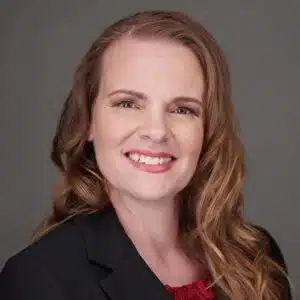
Picture of Dr. Bonnie J. Mitchell DBH, LPCC

Dr. Bonnie J. Mitchell DBH, LPCC

Dr. Bonnie Mitchell is a behavioral health leader, clinician, and advocate dedicated to expanding access to compassionate, evidence-based mental health and substance use treatment. She earned her Doctor of Behavioral Health degree from Arizona State University in 2018, holds a Master’s degree in Clinical Counseling for Mental Health, and a Bachelor’s degree in Psychology. She is a Licensed Professional Clinical Counselor in California. Throughout her career, Dr. Mitchell has served in executive and clinical leadership roles including Executive Director, Regional Clinical Director, and C-suite behavioral health executive.