

Postpartum depression (PPD) is a serious mood disorder that can develop after childbirth, marked by persistent sadness, anxiety, exhaustion, and difficulty bonding with the baby that go well beyond the short-lived baby blues. It is common, treatable, and not a reflection of a parent’s love or capability.
For a fuller picture, see our guide to depression treatment options and our article on treatment-resistant depression.
PPD is often hidden behind the expectation that new parenthood should feel joyful. Recognizing it as a medical condition, related to other depressive disorders, is the first step toward getting help. This guide explains what PPD is and when residential care makes sense.
At our Roseville facility, our clinical team treats adults 18 and older across Greater Sacramento and Placer County whose depression, including postpartum depression, has grown beyond what outpatient care can hold.
Key Takeaways
- PPD is more than the baby blues: symptoms last beyond two weeks and interfere with daily functioning.
- It is common and treatable: it affects a large share of new parents and responds well to care.
- It is not a failure: PPD is a medical condition, not a reflection of love or capability.
- Anxiety often comes with it: intrusive worry and panic frequently accompany postpartum depression.
- Severe PPD can affect safety: thoughts of self-harm or of harming the baby need urgent help.
- Residential care fits when symptoms are severe, safety is at risk, or outpatient care is not enough.
What Postpartum Depression Is
The National Institute of Mental Health describes perinatal depression as depression during pregnancy or after birth that is more intense and lasting than the baby blues. It can make caring for yourself or your baby feel impossible, which is exactly why treatment matters.
Baby Blues vs. Postpartum Depression
The baby blues are common and brief; postpartum depression is deeper and lasting. The table below shows the difference.
| Feature | Baby Blues | Postpartum Depression |
|---|---|---|
| Onset | Within days of birth | Within weeks to months of birth |
| Duration | Resolves within about two weeks | Persists beyond two weeks |
| Severity | Mild mood swings and tearfulness | Disabling sadness, anxiety, and exhaustion |
| Functioning | Largely intact | Significantly impaired |
| Treatment | Usually none needed | Therapy, medication, sometimes higher-level care |
"Postpartum depression is not a character flaw or a parenting failure. It is a medical condition, and it responds to treatment.
— Dr. Bonnie J. Mitchell, DBH, LPCC, Clinical Director
How Postpartum Depression Is Treated
Treatment usually combines psychotherapy with, when appropriate, medication management chosen with breastfeeding and individual factors in mind. Care begins with a comprehensive assessment that also screens for the anxiety that so often accompanies PPD.
Our family program brings partners and loved ones into the process, which matters a great deal in the postpartum period. A typical residential stay runs around 30 days, followed by a step-down to outpatient or virtual support.
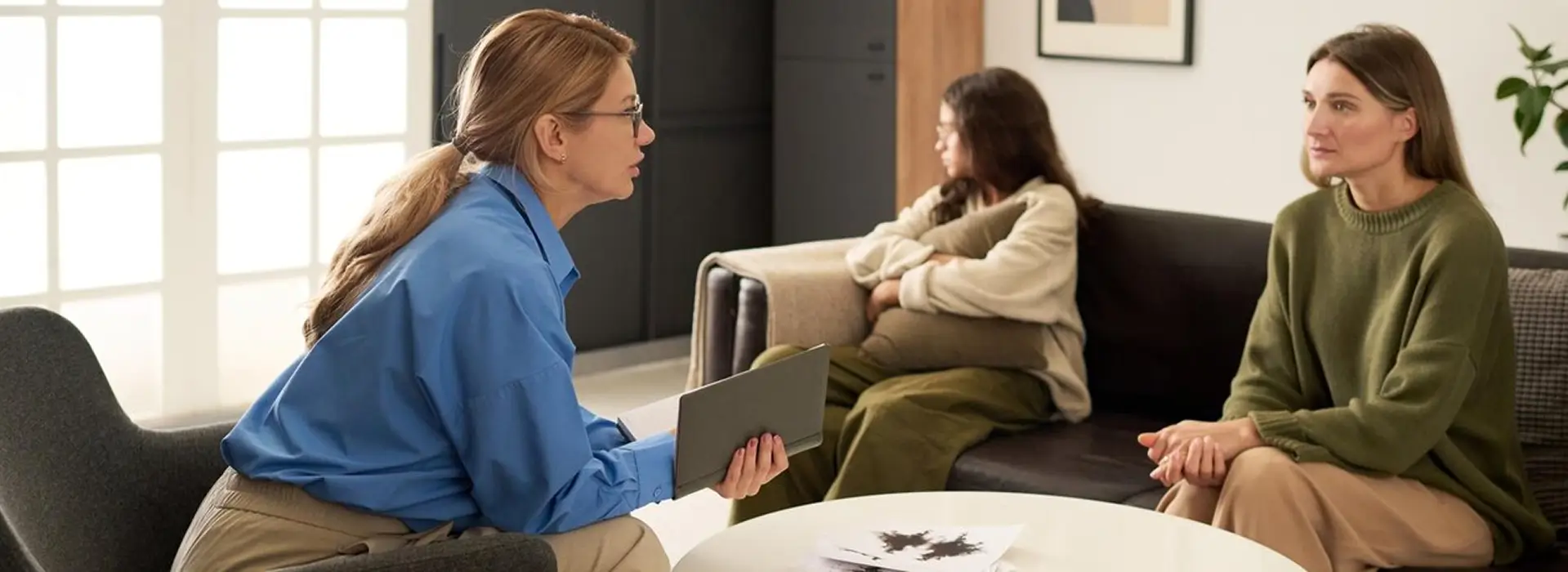
Treatment for Postpartum Depression
When postpartum depression has become severe, our residential program treats the depression with intensive, daily support.
Explore depression treatment →When Residential Care Makes Sense
Most postpartum depression is treated as an outpatient. Residential care becomes the right step when symptoms are severe, when safety is at risk, or when a parent cannot function or care for themselves despite outpatient treatment.
The table below lists signs that postpartum depression may need more than outpatient care.
| Sign | What It Suggests |
|---|---|
| Thoughts of self-harm or of harming the baby | Urgent: this needs immediate help |
| Unable to sleep even when the baby sleeps | A severe symptom load |
| Cannot care for yourself or the baby | Daily functioning has broken down |
| No improvement with outpatient treatment | A higher level of care may help |
In Crisis Right Now?
If you or someone you love is in immediate psychiatric crisis, call or text 988 — the Suicide and Crisis Lifeline. Available 24/7, confidential, free.
If life is in danger, call 911. Sacramento Mental Health is a residential treatment program — not an acute crisis or emergency service.
We admit adults 18 and older. Coordinating infant care during a residential stay is a family decision, and our admissions team can talk through how a stay would work.
Frequently Asked Questions About Postpartum Depression
How is postpartum depression different from the baby blues?
The baby blues are mild mood swings and tearfulness that resolve within about two weeks of birth. Postpartum depression is deeper and lasting, with disabling sadness, anxiety, and exhaustion that persist beyond two weeks and interfere with daily functioning. PPD needs treatment; the baby blues usually do not.
How common is postpartum depression?
It is common. The CDC reports that about 1 in 8 new mothers experience symptoms of postpartum depression, and rates are higher in some groups. It is one of the most common complications of childbirth, and it is highly treatable.
Can I take medication for PPD if I am breastfeeding?
Often yes. Several treatments are considered compatible with breastfeeding, and the choice is made individually with a clinician weighing benefits and your specific situation. Medication is one option alongside therapy, and an assessment guides the plan.
Is postpartum depression my fault?
No. Postpartum depression is a medical condition driven by hormonal, biological, and situational factors, not a reflection of your love for your baby or your ability as a parent. Seeking treatment is a sign of strength, not failure.
When does postpartum depression need residential treatment?
Residential care fits when symptoms are severe, when safety is at risk, or when a parent cannot function despite outpatient treatment. Our Roseville program admits adults 18 and older for intensive, daily care, and our team can talk through how a stay would work.